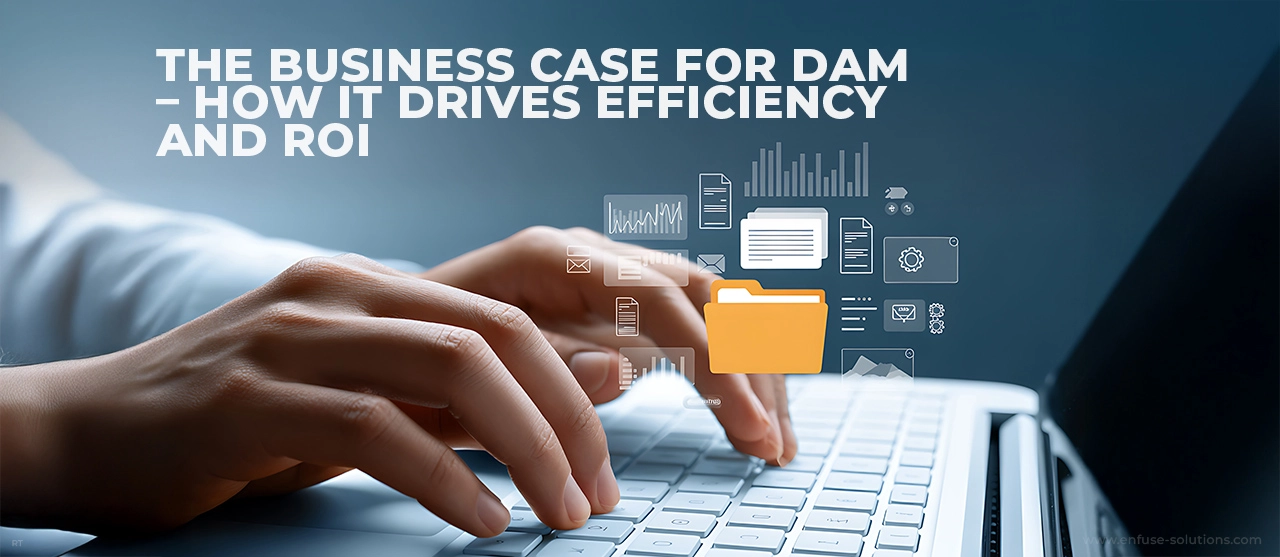
Digital Asset Management (DAM) is no longer a “nice-to-have” repository – it’s an operational backbone for modern marketing, product, and creative teams. Organizations that centralize, govern, and automate their digital assets gain measurable efficiency, faster time-to-market, and tangible return on investment.
Below, let’s break down the business case for Digital Asset Management with the latest industry numbers, real-world ROI studies, and practical levers your business can pull to turn assets into measurable value.
Market Momentum: Why DAM Matters Now
The DAM market is expanding rapidly as enterprises move toward omnichannel content strategies and AI-driven operations. MarketsandMarkets estimates the global DAM market will grow from roughly USD 5.3 billion in 2024 to USD 10.3 billion by 2029 (a ~14% CAGR), reflecting broad adoption across industries. Other analyses project similarly strong growth, underlining that DAM platforms are becoming core infrastructure for content-heavy organizations.
Why does that growth matter? Simply put: more content, more channels, and higher expectations for personalization mean businesses that can manage assets effectively can launch campaigns faster, maintain brand consistency, and reduce wasted work.
Efficiency Gains You Can Measure
A well-implemented DAM reduces friction across the asset lifecycle — from creation and tagging to re-use and distribution. For example, vendor-commissioned Forrester Total Economic Impact™ studies repeatedly show striking returns: one Forrester TEI found a 434% ROI and a dramatic reduction in time spent managing visuals after DAM adoption — including an up to 90% reduction in asset management time and meaningful drops in asset recreation costs. These are real business levers: less time searching, fewer duplicated creative assets, and faster approvals.
Practical KPIs to track:
- Time-to-first-use for new assets (hours → minutes).
- Rate of asset reuse (higher = better ROI).
- Reduction in duplicate assets and rework costs (percent savings).
- Campaign launch time (days → hours).
Cost Savings + Revenue Upside = Persuasive ROI
DAM delivers cost savings (less admin and fewer recreations) and revenue upside (faster campaigns, improved personalization). Forrester case studies and vendor TEI reports quantify both sides: lower operational costs and improved marketing velocity translate to multi-year NPV improvements and multi-hundred-percent ROIs for many organizations that replaced fragmented storage with enterprise DAM. When you combine these efficiency gains with better governance (rights management, compliance), the financial case becomes even stronger.
AI, Search, And Discoverability: Multiplying The Returns
The newest generation of DAM platforms embeds AI to auto-tag, transcribe, and categorize assets. According to recent industry surveys, businesses that integrate AI into their DAM measure ROI primarily via time savings (40%), and report improved asset discovery, faster time-to-market, and higher workflow efficiency as top benefits. Auto-tagging and smart metadata significantly reduce manual work and improve findability — a multiplier for reuse and personalization.
Real-world impact:
- Auto-tagging cuts manual metadata work by a large margin (varies by use case).
- Improved search accuracy increases asset reuse and reduces time wasted recreating content.
- AI-driven variants (different sizes/formats) speed multichannel delivery.
Risk Reduction And Governance: Compliance As Value
The governance features in DAM (versioning, rights management, approval workflows, audit trails) aren’t just bureaucratic — they lower legal and brand risk. Preventing unauthorized use or expired-asset distribution shields organizations from licensing fines, complaint costs, and reputational damage. Those avoided costs are often ignored in simple ROI calculations but can be substantial.
Choosing The Right DAM Depends On Business Goals
Not all DAMs are the same. Enterprise needs (global brand governance, high-volume video management) require different capabilities than mid-market needs (simple centralization and sharing).
Evaluate vendors on:
- Metadata and taxonomy flexibility
- AI capabilities (auto-tagging, visual search)
- Integrations (CMS, PIM, creative tools)
- Security and rights management
- Reporting and analytics for ROI tracking
Analyst resources (Gartner, Forrester, IDC, MarketsandMarkets) and vendor TEI studies are useful for benchmarking vendor claims and projected savings.
Quick Guide: Demonstrating DAM ROI In 90 days
- Baseline: measure current time spent searching and recreating assets.
- Pilot: deploy DAM for one team or product line; enforce metadata standards.
- Track: measure time-to-find, reuse rate, and number of recreated assets.
- Multiply: roll out integrations (CMS, creative tools) and enable AI auto-tagging.
- Report: show cost savings + productivity gains + faster campaign launches to leadership.
EnFuse Solutions — How We Help
EnFuse Solutions focuses on providing comprehensive DAM strategy and implementation services for businesses. We help organizations map existing asset workflows, design taxonomies, integrate DAM with CMS/PIM/creative tools, and operationalize AI-driven metadata pipelines so businesses realize ROI faster. EnFuse also offers training, governance guides, and continuous optimization, transforming DAM from a simple repository into a powerful driver of revenue and efficiency.
Conclusion — Make DAM A Strategic Investment
The numbers are clear: the DAM market is growing fast, and organizations that centralize assets, automate metadata, and embed AI capture meaningful efficiency and financial gains. When you factor in the reduced creative waste, faster time-to-market, stronger brand governance, and measurable ROIs from independent TEI studies, DAM moves from “nice-to-have” to strategic infrastructure.
If you’re considering DAM, talk to EnFuse Solutions to map a pilot that proves ROI quickly and scales across your business. Take the first step — schedule an assessment and start converting your content into measurable business value today.
Tags