Also known as video labeling, video annotation is the process of adding meaningful tags, metadata, or labels to objects within a video. This process is vital to the success of AI, machine learning (ML), and computer vision models that depend on large volumes of annotated video data to recognize and interpret the real world.
According to Grand View Research, the global data annotation tools market is expected to grow at a CAGR of 26.3% from 2024 to 2030, driven largely by the demand for high-quality labeled datasets for autonomous systems, retail analytics, and healthcare AI. With the explosion of video-based data from surveillance cameras, drones, and connected devices, video annotation has become more important than ever.
Let’s explore the major types and real-world applications of video annotation.
Types Of Video Annotations
Here are the 7 most common types of video annotations used in AI and ML development:
1. Bounding Boxes
Bounding boxes remain the most widely used and cost-efficient method of video annotation. Here, annotators draw rectangular boxes around objects appearing in video frames to help AI models detect and track them across time.
Applications include:
- Object detection in autonomous and self-driving vehicles
- Retail inventory tracking and product recognition
- Vehicle damage assessment for insurance
- Surveillance systems for identifying people and vehicles
Modern annotation tools now automate parts of this process using AI-assisted labeling, improving both speed and accuracy.
2. Polygon Annotation
When dealing with irregularly shaped objects, polygon annotation provides higher precision. By marking multiple coordinates around the object, this technique allows models to accurately understand boundaries and complex contours.
Common Use cases:
- Drone and satellite imagery for mapping rooftops or terrain features
- Self-driving car navigation, detecting sidewalks, trees, or uneven road edges
- Agricultural analytics, identifying crop boundaries and irrigation patterns
With advances in geospatial AI, polygon annotation has become indispensable for environmental and infrastructure monitoring.
3. Semantic Segmentation
Semantic segmentation assigns a distinct label or color to every pixel in an image, classifying all elements in a frame. This method is crucial when AI must understand contextual relationships between multiple objects.
Examples:
- Virtual try-on platforms distinguish clothing types
- Healthcare imaging, identifying tissues and organs in scans
- Urban planning, classifying roads, buildings, and vegetation
As of 2025, semantic segmentation powered by deep neural networks has become a key component in augmented reality (AR) and industrial automation.
4. Keypoint Annotation
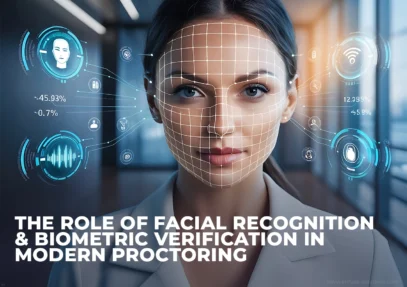
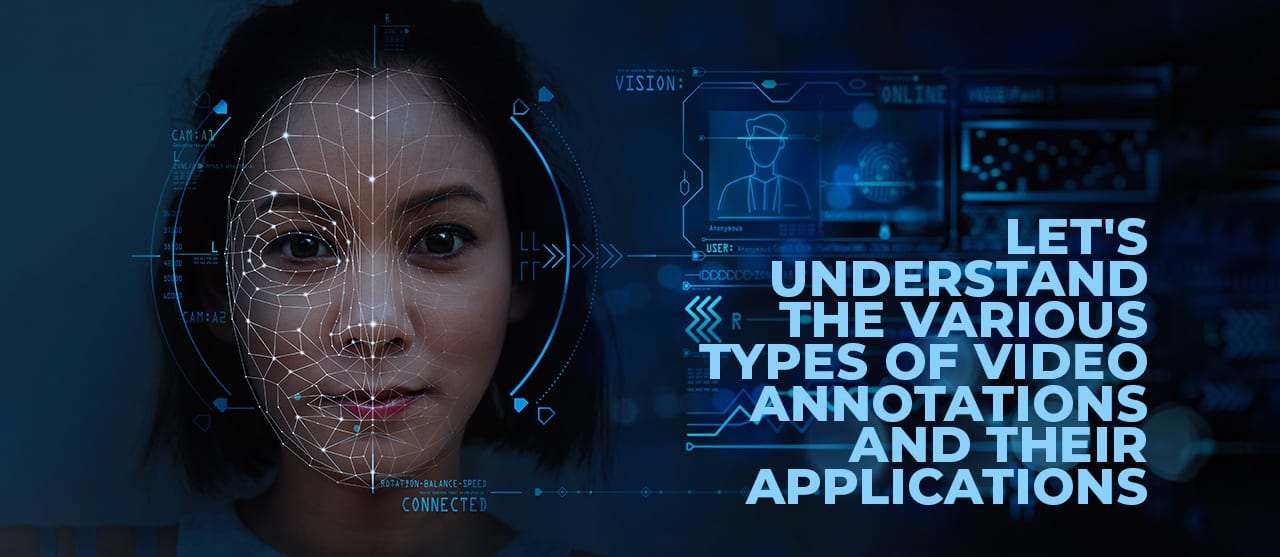
This method identifies key points or landmarks on an object, such as human joints or facial features, to analyze motion, expressions, or interactions.
Applications include:
- Facial recognition and emotion detection
- Gesture-based control systems for gaming or robotics
- Livestock movement monitoring
- Traffic flow and pedestrian movement analysis
The growing field of behavioral analytics relies heavily on keypoint annotation for motion prediction and ergonomics research.
5. Landmark Annotation
Similar to keypoint annotation, landmark (or dot-based) annotation marks multiple points on an object’s structure to help AI understand its outline or skeleton.
Use cases:
- Human pose estimation in sports performance analysis
- Healthcare applications, such as monitoring patient posture
- Sentiment detection from facial microexpressions
Landmark annotation has become increasingly significant in biomechanics and motion-tracking technologies used in sports and rehabilitation.
6. 3D Cuboid Annotation
3D cuboid annotation captures an object’s depth, volume, and spatial orientation—essential for environments where AI must perceive in three dimensions.
Applications include:
- Autonomous vehicles, tracking surrounding vehicles and pedestrians
- Warehouse automation, guiding robotic arms and drones
- Industrial robotics ensures precision in object manipulation
With the rise of digital twins and 3D perception systems, 3D cuboid annotation is now vital in manufacturing and logistics AI systems.
7. Instance Segmentation
Instance segmentation not only identifies object categories but also distinguishes each unique instance within the same class. It combines object detection with segmentation for detailed scene understanding.
Applications:
- Medical imaging, such as detecting multiple tumors or lesions
- Satellite and aerial imagery analysis, distinguishing buildings, vehicles, and ships
- Quality inspection, identifying multiple defects in production lines
This advanced technique forms the backbone of high-precision AI systems used in diagnostics, autonomous navigation, and predictive maintenance.
How EnFuse Solutions Empowers Businesses With Advanced Video Annotation
Video annotation plays a critical role across industries — from automotive and healthcare to retail and manufacturing — but it demands precision, scalability, and domain expertise. At EnFuse Solutions, we deliver end-to-end data annotation services, including text, image, and video labeling, that empower AI and ML models to perform accurately in real-world environments.
Our team leverages human-in-the-loop validation, quality control frameworks, and AI-assisted annotation tools to deliver high-quality, cost-efficient datasets at scale. Whether you’re building the next autonomous vehicle, enhancing medical imaging AI, or developing smart surveillance systems, EnFuse helps you turn raw video data into actionable intelligence.
Partner with EnFuse Solutions today to power your AI models with expertly annotated video data and drive smarter, faster innovation.
Tags