Artificial intelligence is transforming healthcare, but even the most advanced AI models are only as reliable as the data used to train them. Medical annotation is crucial, aiding AI in analyzing radiology scans and clinical notes with NLP. Accurate annotation enables AI to identify patterns, enhance diagnoses, and support better patient outcomes.
As healthcare organizations continue to adopt AI, the demand for high-quality data annotation services is growing rapidly. Trusted data annotation companies are helping medical organizations build reliable AI datasets while maintaining accuracy, consistency, and compliance.
Medical Annotation Is No Longer Limited To Medical Images
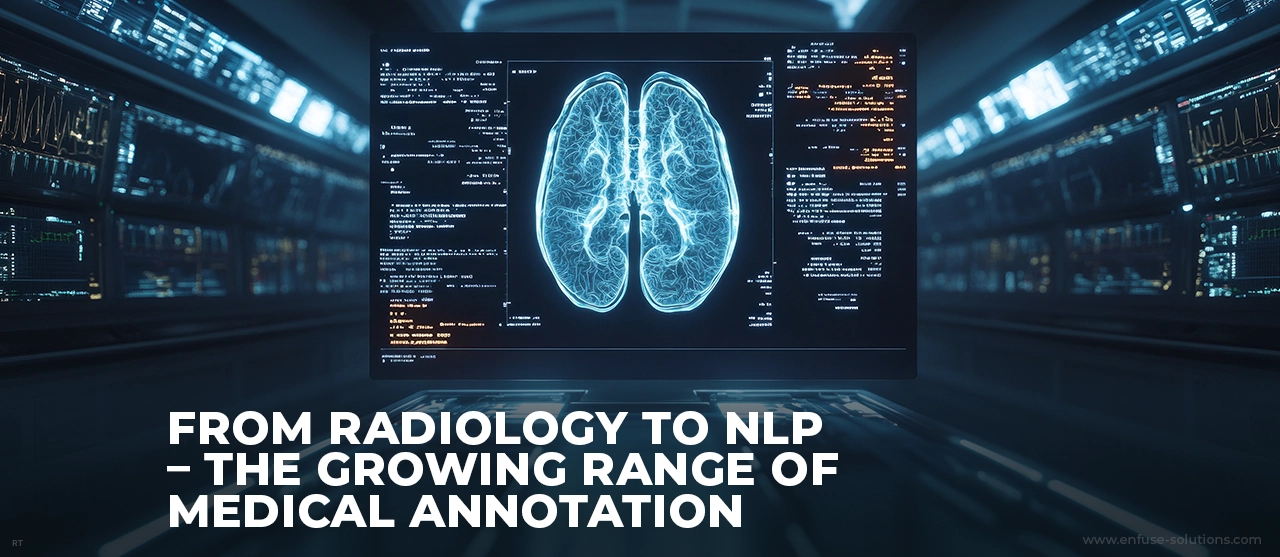
Medical annotation initially focused on labeling imaging data such as X-rays, MRIs, CT scans, and ultrasound images. These datasets enabled AI models to detect abnormalities, assist radiologists, and improve diagnostic accuracy.
Today, the scope has expanded far beyond imaging. AI applications now rely on annotated electronic health records (EHRs), pathology reports, physician notes, prescriptions, and even voice transcripts. This evolution allows healthcare organizations to develop intelligent systems capable of understanding both visual and textual medical information.
The Growing Role Of NLP In Healthcare
Natural Language Processing has become an essential technology for extracting meaningful insights from unstructured medical text. Hospitals generate enormous volumes of clinical documentation every day, but most of this information is difficult for machines to interpret without proper labeling.
Through accurate data labeling and annotation, AI systems can identify medical entities, classify diseases, recognize medications, and understand relationships between symptoms and treatments. This helps automate documentation, improve clinical decision-making, and streamline healthcare workflows.
Why Accuracy Matters In Medical AI
Healthcare is one of the most sensitive industries for AI adoption. Even small annotation errors can affect model performance and lead to inaccurate predictions. For this reason, medical datasets often require expert reviewers, multiple quality checks, and standardized annotation guidelines.
Professional annotation services combine human expertise with advanced quality assurance processes to ensure datasets remain reliable for AI model development. High-quality annotations also improve regulatory compliance and reduce the risk of biased AI outcomes.
Expanding Medical Annotation Use Cases
Medical annotation now supports a wide range of healthcare innovations, including:
- Radiology image analysis
- Pathology slide annotation
- Tumor and organ segmentation
- Clinical text annotation for NLP
- Medical document classification
- Drug and adverse event identification
- Electronic Health Record (EHR) analysis
- Healthcare chatbot training
- Clinical decision support systems
As AI adoption continues to expand, organizations increasingly rely on experienced annotation company partners that understand healthcare-specific data requirements and quality standards.
Choosing The Right Annotation Partner
Selecting the right partner requires more than technical expertise. Healthcare organizations should assess providers on domain knowledge, scalable workflows, quality assurance, secure data handling, and support for various annotation formats.
Leading image annotation services often combine experienced medical annotators with AI-assisted workflows to improve both speed and consistency. This approach helps organizations accelerate AI development without compromising data quality.
Companies such as EnFuse Solutions support enterprises by delivering scalable annotation solutions designed for healthcare AI projects. With experience across multiple industries and advanced annotation capabilities, EnFuse helps organizations prepare high-quality datasets for machine learning and generative AI applications.
The Future Of Medical Annotation
Medical AI is evolving far beyond diagnostic imaging. Future applications will combine medical images, clinical text, wearable device data, genomics, and real-time patient information into unified AI models. These multimodal systems will require more sophisticated annotation processes than ever before.
As healthcare continues embracing artificial intelligence, reliable annotation will remain the foundation of trustworthy AI. Organizations investing in accurate medical annotation today will be better positioned to build intelligent healthcare solutions that improve efficiency, enhance clinical decisions, and ultimately deliver better patient care.
Frequently Asked Questions
What Is Medical Annotation?
Medical annotation is the process of labeling healthcare data, including medical images, clinical documents, and patient records, to train AI and machine learning models.
Why Is Medical Annotation Important For AI?
It provides accurate training data that enables AI systems to recognize diseases, understand medical language, and deliver reliable predictions.
How Is NLP Used In Healthcare Annotation?
NLP uses annotated clinical text to identify medical terms, diseases, treatments, medications, and relationships within healthcare documents.
Which Healthcare Data Can Be Annotated?
Medical images, pathology slides, radiology scans, EHRs, physician notes, laboratory reports, prescriptions, and audio transcripts can all be annotated.
What Should Organizations Look For In Data Annotation Companies?
They should consider medical expertise, data security, quality assurance, scalability, compliance standards, and experience with healthcare AI projects.
Tags